
doing it a bit better
it can't be this hard


I spend a lot of my time frustrated. So much so that I have a partner who thinks I am always mad. That’s what she said, “always mad”. Things like that stick with me because they feel unfair because they’re absolutely untrue, and nothing really bugs me like someone believing something about my thoughts or feelings without even checking with me. (We’re long distance enough that there’s at least as much longing and distance as there is close proximity and sometimes there’s more gap in the gap than either of us would like.) At any rate, I digress.
It is true that I’m frustrated a lot. There’s a term for it now, “justice sensitivity” which just means I just want things to be just, apparently more often than...whoever developed the scale of what was more than usual. So I’m frustrated about the environmental decay that could have been prevented, and the *waves hands at everything political* and a bunch of other stuff.
(Sometimes I am also frustrated at my woodworking project or my knitting or my weaving or my ineptitude at leatherwork because I have not practiced much yet. But that is not the frustration we are talking about here.)
But one of the things that touches my life for hours and hours every day is my frustration with tech.
Now this is not the usual frustration, either, not the why doesn’t this program do what it says on the tin stuff. Not even the where the heck did they move my menu this time, no one asked them to move the menu stuff.
No. It’s the this was a perfectly good application until you let capitalism ruin it stuff. Or, as Cory Doctorow so brilliantly put it, enshittification.
But here’s the thing. Enshittification is voluntary. Totally, completely voluntary. Entirely voluntary. No one has to enshittify their company, and if they tell you they do, (a) they’re lying or (b) they’re not in charge.
There are reasons why companies do it, like, “oh god we’re out of funds and the only way we can bring in enough funds to keep operating is to take money from this person who will force enshittification upon us”. In fact, that’s probably the most common reason. And yes, in that situation they can either close or enshittify, and since people rely on companies for things like salaries, most of them will try to stay open at almost any cost.
But part of the reason they get into that situation is because we the consumers do not wish to pay what it costs to have good services and software. (Or we can’t. Usually a combination of both, we all need groceries somehow.) When I was a kid, software was expensive, you bought it once, and when it upgraded you usually had to pay for the new version, at least an upgrade fee. We also had like, five programs on our computers which went all the way up to ONE GIGABYTE of hard drive storage by the time I was in college.
Then there was the era of shareware and freeware, where people would throw a thing on a disk and hope it went viral in the manner of the day, by people copying and sharing the disk. There was a thing at the end that said, “hey if you like this please throw money our way” but rarely were these programs a primary means of subsistence for their makers. After all, this was also a time when jobs paid better relative to cost of living and usually offered regular (not managed care) health insurance and at least some families could survive on one salary. People had free time instead of side hustles, and part of that meant it was possible for them to make stuff and give it away and experiment without worrying about raising rent money.
Right now, this week, I have been participating in a group project that I actually enjoy, because lots of other people are also participating. One of the major social media sites has offered an engagement bonus to a creator, where they said, “earn so much for engagment and we’ll give you an extra x amount of money” and it’s not small money, it’s like...rent money. So all her followers are engaging as much as possible to help her get her bonus. I don’t know how I ran across her, I’ve never watched a video of hers all the way through, but I want her to get the money and it’s something I can do to make someone’s life better in the current hellscape, so I drop a comment or I watch part of a video, or both, every time I see her stuff. Because these days, side hustles matter.
Back to software development.
So then we got in the habit of not having to pay, or not having to pay much (except Adobe and Microsoft, whom we all learned to despise for an assortment of reasons including the cost, but whose products we still ended up using). And then we entered the era of SaaS (software as a service, aka Everything is a Subscription) because it felt easier to say yes to ten bucks a month than $120 or $300 every year or two, and it turns out software development does need funds to happen on a large scale or in a world where everyone has a side gig because of the aforementioned other problems. But then the SaaS and other companies decided their CEOs needed much more money than the already quite a lot they were making, and so they thought “oh we’ll just raise our prices” and for a while they did but then we all looked at our budgets and decided no, that would not be a good idea at all and eventually we started migrating off “industry standard” software if the prices went too high. (This is not an example of us not wanting to pay what production costs anymore.)
At the same time, those same companies were looking for ways to get EVEN MORE money than any individual could pay, because it turns out the real money to be made in business is by selling to other businesses. Like...advertising. So they all (most) started selling out, trying to cut corners with so-called AI and other automations (when was the last time you called a company and just got patched right through to a human?), selling our eyeballs to the highest-bidding advertisers, and using algorithms to mess up our user experience.
I pick what I want to read, that’s part of why I like the internet. I do not like it rearranging until I read what some complicated combination of math and advertising executives wants me to read. Nope.
(I have recently noticed that Substack has started to mess with my feed, and as a result I missed almost all of the 30 days of drawing class with Wendy MacNaughton and I’m mad about it. If you go to your inbox on your mobile device, look in the upper left and see if it’s set to sort for Priority or Recent. Recent will give you the chronological feed you’re used to. At least they seem to let me turn the algorithm off and leave it like that.)
But WHAT IF...
What if there were a tech company founded on an anti-enshittification base model, with the commitment written into their documentation from the beginning? It could use B Corp modeling to help get and maintain that but it is possible for a B Corp to enshittify so…more than that.
Not a co-op.
It would have a regular structure with a CEO etc, and a B to C monetization plan. But it would be committed to continue to serve the customers and their needs.
Costco does this in the retail space, even after its sale a few years ago, at least so far.
What if also in tech?
It can’t be that hard. You just make good moral decisions for your users. People do it.
I’ve been watching the Bananaball growth arc for a while now.
For those of you who don’t know, Bananaball is a ...developmental fork from baseball. This guy named Jesse got put in charge of a failing college team a few years back, and decided to improve the audience/crowd/fan experience to bring more people in. He analyzed what was wrong with the experience of watching baseball, and he changed it.
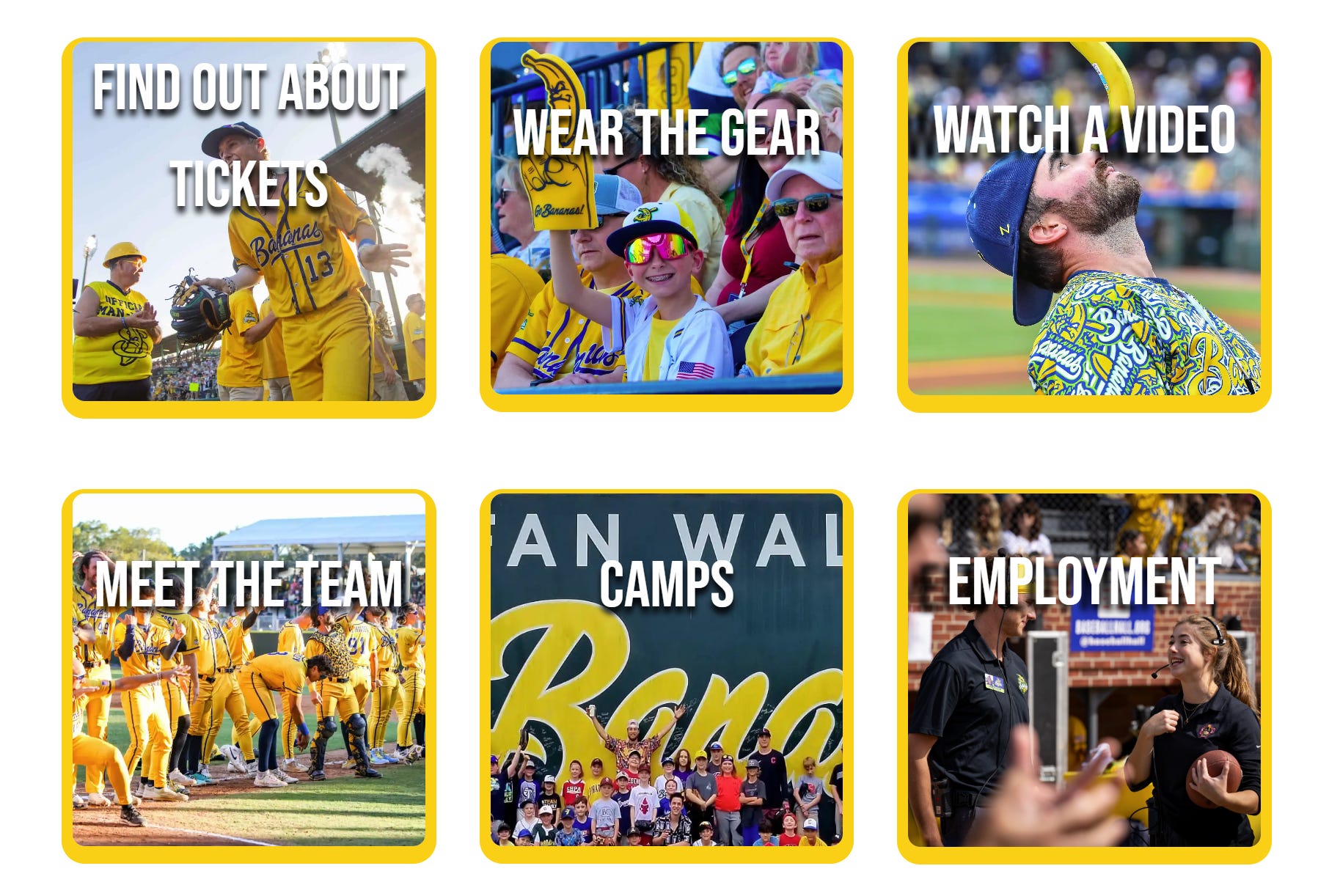
For the longest time they were one team, then a handful of teams, and this year they seem to have really hit a tipping point and are rolling out more expansions.
They have a merch warehouse.
They talk about the growing size of the merch warehouse on their social media, which they use masterfully. They also talk about how the players are entertainers, they’re there to entertain the fans, they’re sort of Harlem Globetrotter-y but the games aren’t thrown. Every team has a theme. They just hired a baseball playing Broadway star. Yes, he’s going to sing. Sometimes there are stilts. The games start hours in advance with a big show outside the stadium. There’s dancing. They don’t allow walks. They don’t allow bunting. It isnt baseball anymore, it’s a cousin. A very entertaining cousin.
And Jesse *keeps the fans in the center*. Ticket prices are low because families should get to go to shows. They have their own resale platform because they want to keep ticket reselling reasonable. If the fans aren’t feeling loved, Jesse goes back to the drawing board.
Their fans are DELIGHTED and their model works and that’s why the merch warehouse is a symbol of their success.
They just had a Bananaball CRUISE. It was sold out.
They support families fostering kids (It’s called Bananas Foster, because of course it is.)
They want people to feel good and supported and they want to do good in the world.
So here’s what I want: I want Bananaball style software companies.
I want a social media company that actually moderates for harmful content. I want it to say up front “this is what we allow and this is what we don’t” and then moderate accordingly. I would like this company to have values like mine, ideally, but honestly anyone who moderates fairly against their clearly stated community agreements would be a relief. I want my women friends to not have to put up with terrible men violating their consent in dms and comments. I want my queer and trans friends to be able to post without worrying about being attacked. I want reports of problems to go to a person, not some weird corner-cut LLM masquerading as intelligence. I want a feed that I can control: chronological, popular, things you already interacted with. I want strong, well-trained, human moderation separate from community building separate from marketing. Why those three roles got smooshed together I’ll never understand (I know, capitalism. But still.)
And unfortunately, to build such a thing I think it will have to be bootstrapped, because my experience is that investors cannot be trusted to keep their hands out of the companies they invest in, and usually they are the ones responsible for destroying the very thing they saw potential in because they can’t wipe the dollar signs out of their eyes.
I got into the consulting work I do, small teams, development and ethics and leadership, because I could see how amazing it would be to have a large and influential social media or other tech company (FAANG style) that had *good* systems and ethics at its heart, and I still believe it can be built. But we have to imagine it, and we have to demand it, and we have to be willing to pay for it.
If I’m going to pay $20 a month, I want that money to go toward my needs and also toward a better world.
Netflix and Disney and Google aren’t doing that. But someone could. Someone right now can. We just need to make it happen.
If this is you, I’m working on my next little book, this one about best business practices, but I can also be invited into the process of developing a company starting at ideation, or at any other point as you grow, move forward or (if it’s happening) manage crises. We can work on systems, growth, ethical structures, leadership development for your team, hiring well, rebuilding—all of these are impacted by your foundational principles, and I’m here to help you stay in alignment AND make a profit. Heaven knows we need both. Go to aleixianoconsulting.com/index.php/links to learn more about what I’m up to or book a low pressure informational call
.
I'm not in the tech world so I can't evaluate the details here, but I can appreciate the attempt to improve their systems. Leela, I feel that same impetus about Substack, but ther is no invitation to report anything to them. Do you also have a list of what they could benefit from hearing? If so, let's talk about what to do. First on my list would be to have a well-tended Suggestion Box.
I also would love personal guidance on how to work this system for myself. Are you for hire?